#378 Why This Week’s NIH Funding Vote Matters for Rare Disease Patients
February 3rd, 2026 Update:
The U.S. House of Representatives passed it! Now, the bill heads to the President’s desk, where we expect him to sign it into law. This means the NIH is scheduled to receive $48.7 billion in funding (a 1% or $415 million increase over 2025). Therefore the 40% budget cut of NIH was rejected, and instead there will be a 1% increase in funding (as long as the President signs it).
January 30th, 2026 Update:
Another wonderful update, the U.S. Senate passed legislation that advances top priorities for the rare disease community, including strong medical research funding for the National Institutes of Health (NIH) and across the federal government.
The next step for the bill is to go back the U.S. House of Representatives for final passage.
Urge your representatives to pass this legislation, MDA made it easy to do so here.
January 24th, 2026 Update:
Great news, the House of Representatives passed legislation providing strong funding for medical research at the National Institutes of Health (NIH). The next step is for the Senate to pass this legislation, the vote is scheduled for the week of January 26th.
Urge your senators to pass this legislation, MDA made it easy to do so here.
Our host Kira Dineen already reached out to her congressmen in Connecticut, Senators Chris Murphy and Richard Blumenthal, to support the vote scheduled to happen the week of January 26th, 2026. After you reach out to your senators, post it on social, and tag us (@DNATodayPodcast) and MDA (@mdaorg) so we can repost you!
What happens to rare disease families when federal research funding slows down, or gets cut? In this breaking news, bonus episode of DNA Today, we’re digging into what NIH funding cuts mean in real terms: delayed clinical trials, fewer research dollars for ultra-rare conditions, and a slower path from discovery to treatment.
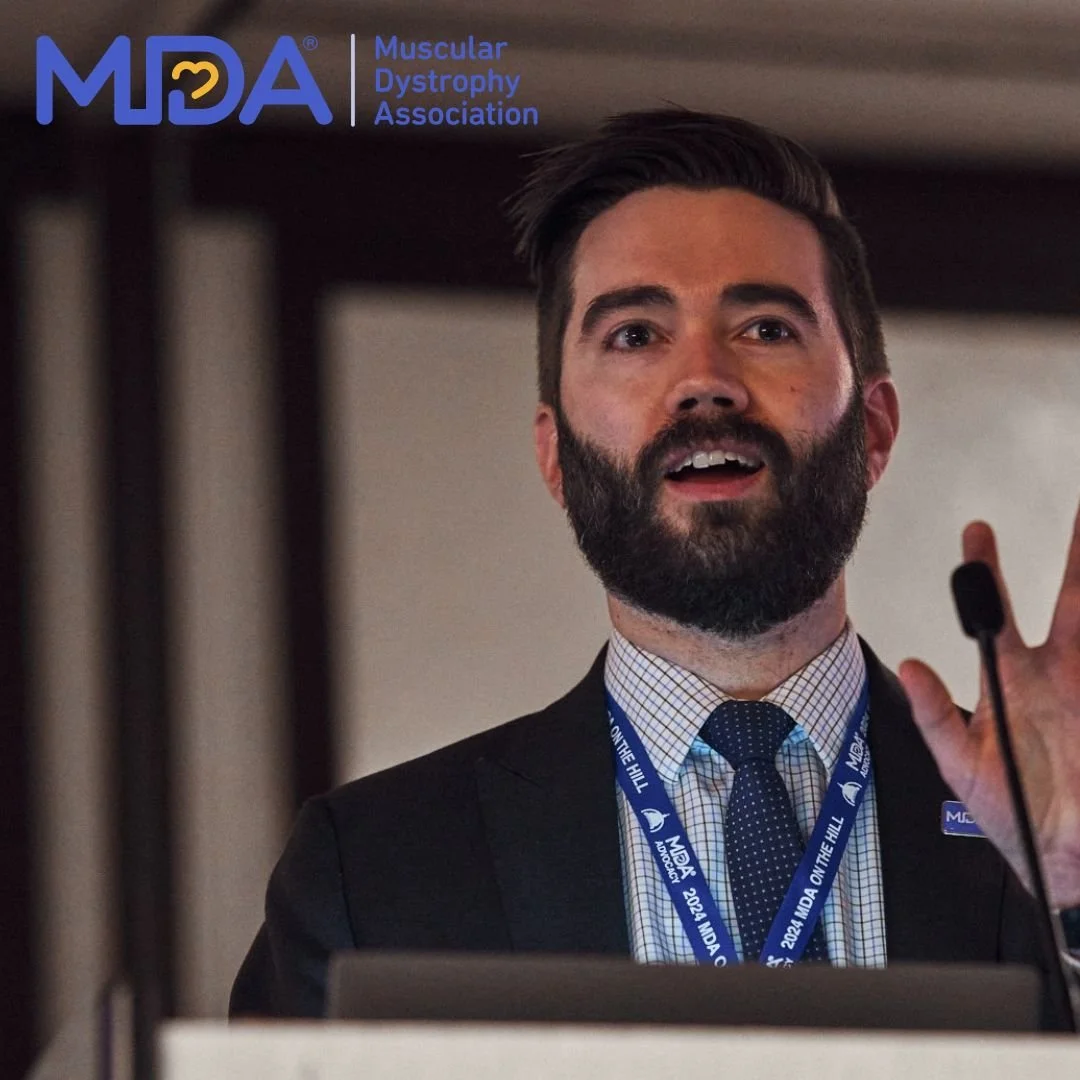
We’re joined by Paul Melmeyer, who serves as the Executive Vice President, Public Policy and Advocacy, at the Muscular Dystrophy Association (MDA). In this role, Paul leads MDA’s policy and advocacy initiatives pertaining to public health, therapeutic development, access to care, and disabilities. Prior to joining MDA, Paul spent over six years with the National Organization for Rare Disorders (NORD). At NORD, Paul led the Federal policy operations in developing and advocating for the enactment and implementation of pro-rare disease patient policy. Paul also holds a Master of Public Policy (MPP) from the George Washington University.
We unpack what’s happening in Washington DC in late January 2026, what it could mean for neuromuscular disease research, and more generally the rare disease community, and what we can do about it.
In This Episode, We Discuss
What’s Actually Happening With NIH Funding
Why the phrase “NIH cuts” understates the real-world impact on patients and families
What proposed reductions for Fiscal Year 2026 could mean for rare disease research
How grant freezes, terminations, and delayed renewals disrupt active studies and clinical trials
Why Rare Disease Research Is Especially at Risk
Why rare disease programs are more sensitive to funding instability than common conditions
The difference between slowed progress and permanent loss for progressive neuromuscular diseases
How NIH funding supports the entire pipeline—from basic science and natural history studies to biomarkers and trials
What happens when labs lose funding: loss of expertise, momentum, and institutional knowledge
Neuromuscular Disease Research in 2026
Where neuromuscular research stands today and what breakthroughs are closest to patients
Which types of studies are most vulnerable to funding cuts
How NIH investment influences industry confidence and pharmaceutical partnerships in ultra-rare diseases
Policy Realities & Misconceptions
How to explain to policymakers that cutting research now increases long-term healthcare costs later
Common misconceptions about NIH funding and why rare disease research can’t simply “pause and restart”
Advocacy: What You Can Do Right Now
The most effective actions for advocates engaging Capitol Hill today
What makes a patient or family story resonate with lawmakers and staffers
How collective advocacy protects not just future discoveries, but lives happening right now
Relevant Resources:
Click here to urge you senators to pass legislation this week to support the NIH. The bill now moves to the Senate for consideration the week of January 26th, 2026.
Relevant DNA Today Podcast Episode:
#306 NIH’s Dr. Francis Collins’ Leadership in the Human Genome Project and COVID-19
#356 From Statehouse to Capitol Hill: A Guide to Effective Advocacy for Rare Diseases
#363 ASHG 2025 Recap: AI Diagnostics, Genetics Publications & Losing NIH Funding
Connect With Us:
Get ready, genetic nerds, another brand-new episode of DNA Today drops this Friday! You can always count on us to deliver fresh content every Friday.
While you wait, why not dive into our library of over 375 episodes? Binge them all on Apple Podcasts, Spotify, our website, or wherever you love to listen, search “DNA Today.”
Prefer watching? We’ve got you covered! For the past four years, we’ve been recording episodes with video, including some filmed at the iconic NBC Universal Stamford Studios. Check them out on our YouTube channel!
DNA Today is hosted and produced by Kira Dineen, MS, LCGC, CG(ASCP)CM . Our Social Media Lead Liv Davidson. And our logo Graphic Designer is Ashlyn Enokian, MS, CGC.
See what else we are up to on Instagram, X (Twitter), BluSky, Threads, LinkedIn, Facebook, YouTube and our website, DNAToday.com. Questions/inquiries can be sent to info@DNAtoday.com.